


From the Editor
Extraordinary growth creates a leadership challenge that struggling organizations rarely face: how to keep the enterprise from becoming a constraint on its own success.
Eli Lilly entered 2026 with exceptional demand for its cardiometabolic therapies, strong financial performance, and an innovation engine creating significant growth opportunities. But that success also increased the demands placed on manufacturing capacity, supply chains, workforce capability, quality systems, regulatory compliance, and capital investment.
This issue examines Lilly through a Results Leadership lens to explore what happens when demand begins to outpace organizational capacity. The challenge is scaling the enterprise fast enough to produce breakthrough therapies while sustaining the quality, innovation, and operational excellence that created the opportunity in the first place.
For Lilly, success has changed the leadership question: Can the organization execute at extraordinary scale without compromising the capabilities that made extraordinary growth possible?
— Lauren Floyd, Writer & Editor
Introduction – When Demand Outpaces Capacity

Most organizations spend years trying to create demand. Far less are prepared to manage it.
Eli Lilly and Company has emerged as one of the world’s most successful pharmaceutical manufacturers, propelled by breakthrough therapies addressing obesity, diabetes, and other cardiometabolic conditions.
Since 2021, the company’s share price has increased at a compound annual growth rate of approximately 35.6%, while revenue growth has significantly exceeded pharmaceutical industry averages.
The company’s success reflects more than favorable market conditions. It is the product of scientific innovation, disciplined capital allocation, strong intellectual property protection, manufacturing excellence, and effective commercialization.
Yet extraordinary success introduces a different class of leadership challenges.
As demand accelerates, organizations must ensure that manufacturing capacity, supply chain resilience, workforce capability, quality systems, regulatory compliance, and operational execution evolve at the same pace as growth. Organizations that fail to scale these supporting systems often discover that growth can expose weaknesses just as quickly as it creates opportunity.
This raises a fundamental strategic question:
Has Eli Lilly mastered growth only to lose sight of execution?
This month’s analysis evaluates Eli Lilly through four integrated lenses:
The Averroes Business Physics Framework
Hartley’s 7-Step Strategic Problem-Solving Model
Blue Ocean Strategy
The Brightline Transformation Compass
Collectively, these frameworks suggest Eli Lilly’s primary challenge is not generating demand or sustaining innovation.
The challenge appears to be scaling organizational capacity fast enough to support one of the largest growth opportunities in modern healthcare.
Scene One – The Business Model and the Rise of Cardiometabolic Health

The pharmaceutical manufacturing industry is one of the most research-intensive, capital-intensive, and highly-regulated industries in the global economy.
Therefore, success requires balancing multiple capabilities simultaneously:
Scientific innovation
Clinical effectiveness
Regulatory compliance
Manufacturing excellence
Commercial execution
Intellectual property protection
Capital allocation discipline
Unlike many industries where competitive advantage can be built through pricing, distribution, or customer experience alone, pharmaceutical companies must continually convert scientific discovery into commercially successful therapies while maintaining strict quality and regulatory standards.
Eli Lilly operates within the rapidly expanding cardiometabolic health segment, which focuses on therapies addressing obesity, diabetes, cardiovascular disease, and related metabolic disorders.
Several powerful forces continue driving market expansion:
Rising obesity rates
Increasing diabetes prevalence
Aging populations
Expanding healthcare access
Advances in GLP-1 therapies
Growing awareness of preventative healthcare
Historically, pharmaceutical companies generated competitive advantage through scientific discovery and successful product development. Research and development-effectiveness was often viewed as a primary determinant of long-term success.
Today, a new challenge is emerging.
Demand for breakthrough therapies is growing so rapidly that manufacturing capacity, supply chain scalability, workforce readiness, and operational execution are becoming strategic differentiators. Scientific innovation may create demand, but operational execution determines whether organizations can fully capture the value created by that demand.
In many respects, the challenge is no longer inventing the future. The challenge is producing breakthrough therapies at the scale required to meet the demand that innovation has created.
So, what does Eli Lilly’s underlying economic engine reveal about its ability to sustain growth over time?
To answer that question, we turn to Business Physics.
Scene Two – The Business Physics of a Pharmaceutical Growth Engine

Behind every strategy sits an economic engine that ultimately determines whether performance can be sustained over time.
The Averroes Business Physics Framework evaluates organizations across six dimensions:
Revenue Momentum
Cost Structure
Capital Intensity
Financial Gravity
Cash Conversion
Energy Efficiency (ROIC)
Collectively, these dimensions measure how effectively an organization converts growth, profitability, cash flow, and capital investment into sustainable value creation.
Here’s what we found:
Business Physics Score: 67.30
Company Condition: Strong
One of the more surprising findings from this analysis was the distinction between market performance and operating performance.
Many observers would assume that a company with Lilly’s market capitalization, share price appreciation, and revenue growth profile would automatically produce an Elite Business Physics score. Instead, Lilly achieved a score of 67.30, placing it within the Strong category.
This result illustrates an important principle that Business Physics does not measure investor enthusiasm. Instead, it measures the underlying economics of value creation.
The framework evaluates whether growth is translating into profitability, whether profitability is translating into cash generation, and whether management is allocating capital in a manner that produces attractive long-term returns.
Key observations include:
Revenue growth significantly exceeded pharmaceutical industry norms
Profitability remained exceptionally strong
ROIC remained attractive
Free cash flow generation remained healthy
Debt levels remained manageable
Capital expenditures increased materially
Dimension | Interpretation
Revenue Momentum | Exceptional growth engine
Cost Structure | Strong operating leverage
Capital Intensity | Elevated but strategic
Financial Gravity | Manageable
Cash Conversion | Healthy
Energy Efficiency | Strong value creation
The score suggests a company operating from a position of strength, but one that is making significant investments today to secure future growth capacity.
Management appears willing to accept short-term pressure on certain financial metrics in exchange for long-term strategic advantage. Manufacturing expansion, production capacity growth, and infrastructure investments may reduce near-term efficiency measures, but they also increase the organization’s ability to support future demand.
The Business Physics profile therefore suggests Lilly’s challenge is not financial weakness.
The challenge is sustaining economic quality while investing aggressively for future growth.
Scene Three – Intellectual Property and the Economics of Innovation

During this analysis, it became increasingly clear that pharmaceutical companies possess a fundamentally different economic structure than most industries.
- Manufacturers invest in equipment.
- Retailers invest in locations and inventory.
- Technology companies invest in software platforms and digital ecosystems.
Pharmaceutical companies invest in scientific knowledge.
Their most valuable assets rarely appear prominently on the balance sheet. Instead, they exist in the form of patents, clinical data, regulatory approvals, scientific expertise, intellectual property portfolios, and research capabilities.
These assets create temporary monopolies that allow companies to recover substantial research and development investments while funding future innovation.
Viewed through this lens, intellectual property functions as a strategic production asset.
The laboratory becomes the factory. Scientific discovery becomes the raw material. Clinical validation becomes quality assurance.
Manufacturing converts intellectual property into therapies that improve patient outcomes and create economic value.
For Eli Lilly, competitive advantage appears concentrated in four primary areas:
Patents
Research and Development
Clinical Validation
Regulatory Approvals
Additional strength emerges from:
Brand reputation
Scientific expertise
Global commercialization capabilities
Manufacturing quality systems
This concentration pattern is important because these assets sit directly inside Lilly’s value creation engine.
Innovation is not merely a support function but is the production system itself.
Scene Four – Hartley’s 7-Step Strategic Problem-Solving Assessment
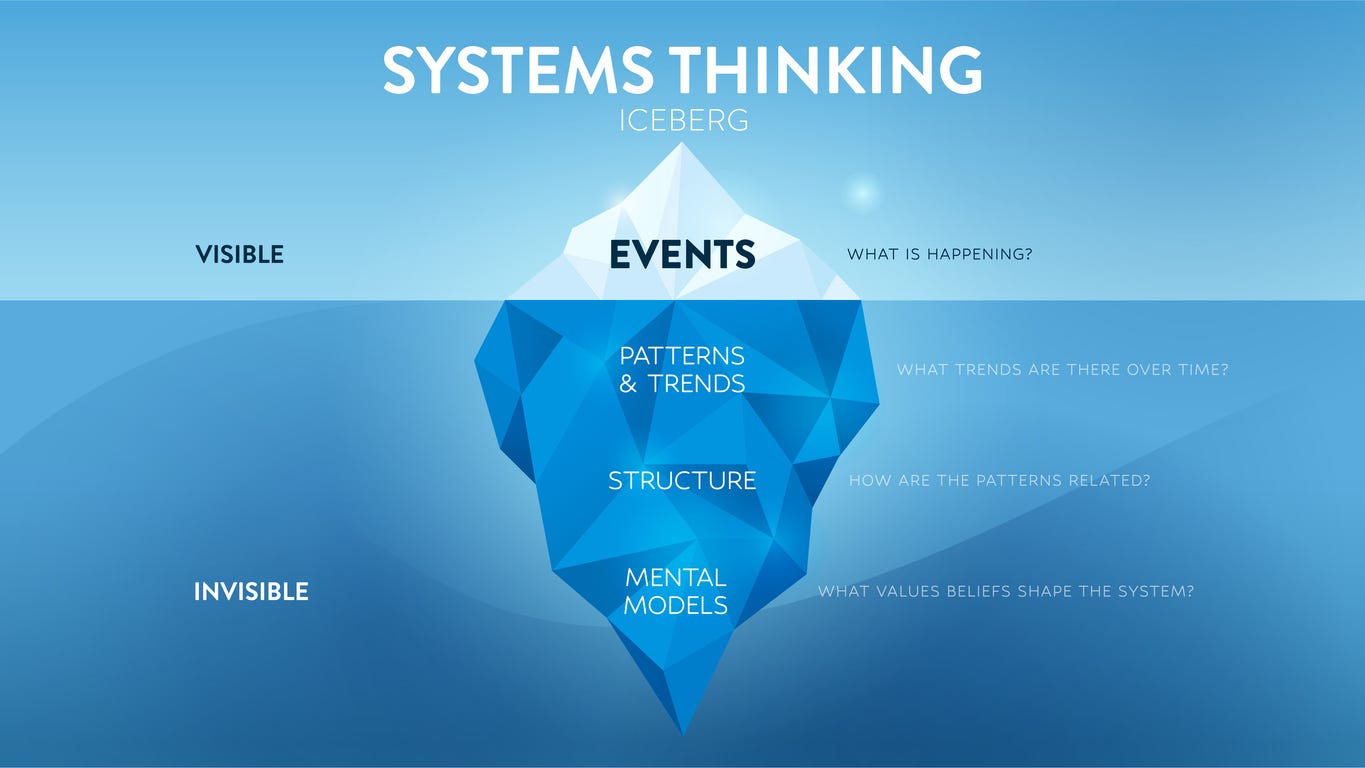
One of the most common strategic mistakes organizations make is misdiagnosing the problem they are attempting to solve. Leaders frequently respond to symptoms rather than root causes.
For example:
Declining revenue may be treated as a sales problem when the underlying issue is product relevance.
Margin pressure may be treated as a cost problem when the underlying issue is competitive positioning.
Operational inefficiency may be treated as a process problem when the underlying issue is organizational design.
Lilly’s situation appears different. The evidence does not suggest a demand, product or market-positioning problem.
The evidence suggests a capacity problem.
Demand for key therapies appears to have exceeded historical assumptions, creating pressure throughout manufacturing, supply chain, and distribution systems.
Using Hartley’s framework, management’s recent investments can be interpreted as an effort to solve tomorrow’s problem before it becomes today’s crisis.
Hartley Step | Eli Lilly Interpretation
Problem Identification | Capacity scaling requirements
Problem Breakdown | Manufacturing, workforce, supply chain
Root Cause Analysis | Demand growth exceeding assumptions
Solution Development | Capacity expansion and investment
Decision Analysis | Long-term production prioritization
Implementation | Manufacturing and infrastructure growth
Performance Monitoring | Output, quality, patient access
The key strategic question is not “Can Lilly grow?”, but, “Can Lilly sustain extraordinary growth while maintaining quality, compliance, innovation, and operational excellence simultaneously?”
Scene Five – Blue Ocean Strategy Assessment

The Blue Ocean Strategy argues that sustainable success is rarely achieved by competing harder within existing market boundaries. Instead, organizations create long-term differentiation by redefining value creation itself.
The cardiometabolic health market increasingly reflects this principle.
Rather than competing solely on traditional pharmaceutical dimensions, Eli Lilly appears to be helping redefine treatment expectations for obesity, diabetes, and metabolic health.
Viewed through a Blue Ocean lens, Lilly’s strategic direction can be interpreted as follows:
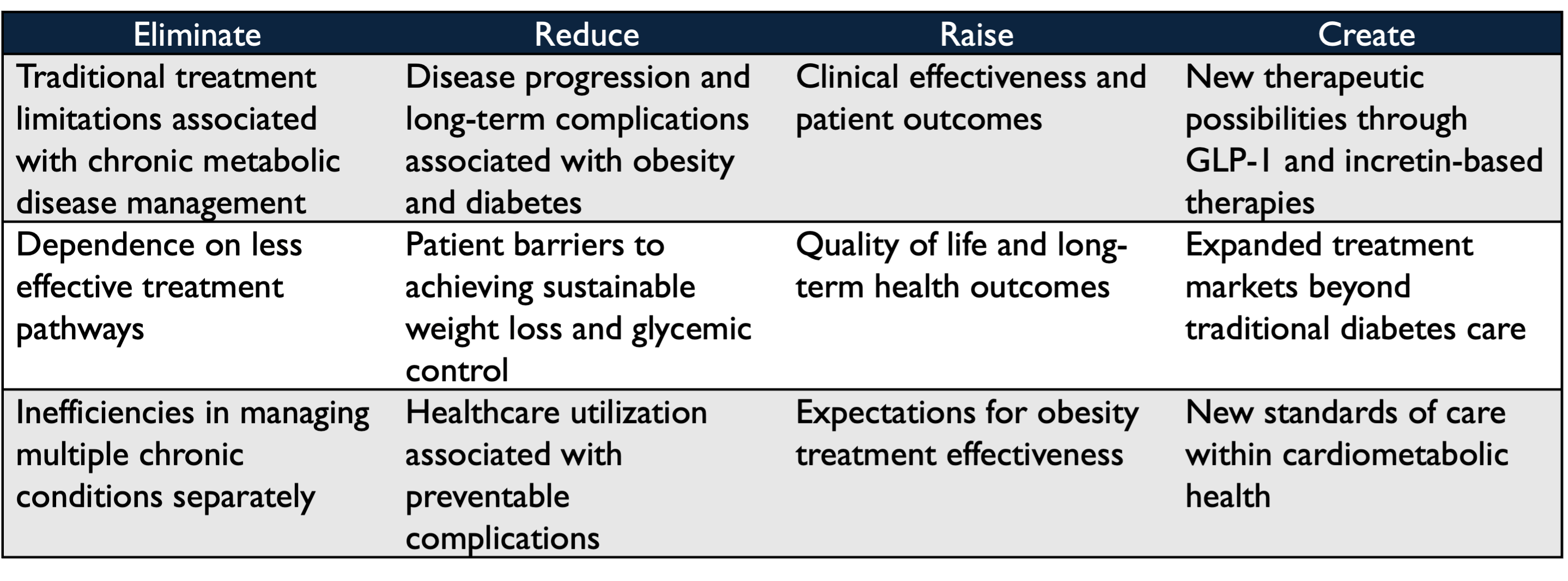
Viewed through a Blue Ocean lens, Eli Lilly appears to be doing more than competing within the traditional pharmaceutical industry. The company is helping redefine the standard of care for obesity, diabetes, and metabolic health. Rather than competing solely for market share, Lilly is participating in the creation of entirely new market opportunities. This distinction is important because organizations operating within Blue Oceans face a different challenge than organizations competing in mature markets. The leadership challenge shifts from winning customers away from competitors to scaling innovation, manufacturing capacity, and organizational capabilities fast enough to support market creation.
Scene Six – Brightline Transformation Compass Assessment

Research consistently demonstrates that most strategy failures occur because of poor execution, not by poor strategic thinking.
Organizations underestimate complexity, overestimate capacity, fail to align resources with strategic priorities, or struggle to sustain momentum during implementation.
The Brightline Transformation Compass provides a useful framework for evaluating Lilly’s ability to sustain its current growth trajectory.
1. Brightline Dimension | Assessment
2. Leadership Alignment | Strong
3. Transformation Intent | Clearly defined
4. Manufacturing Expansion | Actively underway
5. Workforce Capability | Critical dependency
6. Execution Discipline | Essential
7. Capital Allocation | Strategic and deliberate
8. Innovation Pipeline | Strong
9. Performance Monitoring | Comprehensive
One of the strongest indicators supporting Lilly’s position is the alignment between leadership messaging, capital allocation, manufacturing investment, and strategic priorities. However, success has also increased organizational complexity.
Manufacturing facilities must expand.
Supply chains must scale.
Talent must be recruited and developed.
Regulatory compliance must remain uncompromised.
Product quality must remain world-class.
Capital investments must generate acceptable returns.
None of these activities are optional.
All must occur simultaneously.
This may represent the defining leadership challenge facing the organization over the next decade. The larger challenge may not be innovation, but maintaining operational excellence while scaling globally.
Final Insights – When Success Becomes the Leadership Challenge

Over the past year of publishing the Results Leadership Newsletter, one observation appears repeatedly across industries: The most important leadership challenges evolve as organizations mature.
Companies struggling for survival face different problems than companies pursuing growth. Companies pursuing growth face different problems than market leaders.
Eli Lilly demonstrates what happens when an organization reaches the next stage of that evolution.
Creating opportunity is not a challenge for Eli Lilly. Their challenge is building a system capable of sustaining opportunity.
The Business Physics analysis demonstrated that Lilly’s obstacles are not primarily rooted in demand-weakness or financial stress.
The pressure appears concentrated in:
Manufacturing capacity
Operational scalability
Supply chain resilience
Workforce capability
Execution excellence
The Hartley framework suggests leadership understands the underlying problem.
Blue Ocean analysis indicates the company’s strategic direction remains differentiated and value creating.
The Brightline Transformation Compass suggests long-term success will depend on whether Lilly can sustain operational alignment while continuing to scale.
Ultimately, Eli Lilly must Execute at Extraordinary Scale.
And in rapidly growing organizations, that distinction often determines whether success becomes sustainable or temporary.
Growth creates opportunity. Execution converts opportunity into results.
About Results Leadership
Averroes Results Leadership examines how leadership decisions, organizational capabilities, operating models, and technology combine to produce—or constrain—enterprise results.
Published by Averroes Business & Technology, LLC, the publication uses evidence-based analysis to connect strategy, execution, and measurable performance across Results Leadership in Business and Results Leadership in Government.
Business analyses incorporate the Business Physics Performance Assessment (BPPA™) to examine the underlying economics that reinforce—or constrain—sustainable performance.
Amir A. Moore, Founder & CEO of Averroes Business & Technology, serves as Publisher, with Lauren Floyd serving as Writer & Editor, helping shape each issue for clarity, rigor, and executive relevance.